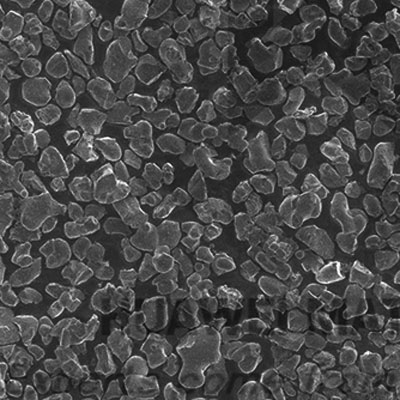
Zirconium Diboride Powder Price & List
| Spec. |
Purity |
Shape |
Available |
| ZrB2-LI003 |
≥99% |
Irregular |
D50 ≤3 um |
| ZrB2-LI010 |
≥99% |
Irregular |
D50 ≤10 um |
| ZrB2-DI060 |
≥99.5% |
Irregular |
10-60 um |
| ZrB2-DI105 |
≥99.5% |
Irregular |
-140 mesh, +325 mesh |
| ZrB2-DI150 |
≥99.5% |
Irregular |
-100 mesh, +325 mesh |
| ZrB2-MI325 |
≥99.5% |
Irregular |
-325 mesh |
| ZrB2-MI200 |
≥99.5% |
Irregular |
-200 mesh |
| Customizable |
≥99% |
Customizable |
Sieve as required |
Note: We provide customized service. If you don't find the powder you want, please send us an email directly. We can customize it according to your requirements.
Zirconium Diboride Powder
Zirconium Dibromide, chemical formula ZrB₂, is an advanced material belonging to the family of ultra-high-temperature ceramics (UHTCs). It possesses a hexagonal crystal system (AlB₂-type) and has garnered significant attention for its ability to withstand extreme environments above 2000°C. ZrB₂ is one of the most representative and promising members of this group and is often combined with materials like SiC to form multiphase ceramics, further enhancing its performance.
Core Characteristics
Extremely high melting point:The melting point is approximately 3246°C, among the highest of all borides, making it a primary choice for ultra-high-temperature applications.
High hardness and good wear resistance:With a microhardness of about 22-25 GPa, it exhibits high hardness and excellent wear resistance.
Excellent thermal and electrical conductivity:Similar to TiB₂, ZrB₂ also exhibits metal-like electrical conductivity (resistivity approximately ~10-40 μΩ·cm) and relatively high thermal conductivity, which facilitates rapid heat dissipation under thermal shock.
Good chemical stability:It demonstrates certain corrosion resistance to molten metals (such as aluminum, copper, iron, etc.), but is prone to oxidation at high temperatures.
Relatively low density:Approximately ~6.1 g/cm³, which is lighter compared to other refractory metals (such as tungsten), making it crucial for weight reduction in aerospace applications.
Moderate oxidation resistance:Pure ZrB₂ begins to oxidize above approximately 800°C, forming ZrO₂ and liquid B₂O₃. This is a major factor limiting its use alone. The oxidation resistance can be significantly improved, often to above 1500°C, by adding SiC.
Zirconium Diboride Powder Application
The core applications of zirconium dibromide powder are concentrated in fields that require withstanding extreme temperatures and harsh environments. Specifically:
Ultra-high-temperature structural materials (Aerospace field)Hypersonic vehicle thermal protection systems: Used to manufacture missile nose cones, wing leading edges, rocket engine components, etc. When aircraft fly in the atmosphere at speeds above Mach 5, these parts face aerodynamic heating ranging from 1600°C to 2000°C. ZrB₂-based composite ceramics (e.g., ZrB₂-SiC) are among the few materials that can maintain structural integrity under such conditions.
Atmospheric re-entry vehicle heat shields: Protect spacecraft or warheads from ablation during re-entry into the atmosphere.
Refractory materialsHigh-temperature furnace components: Used to manufacture thermocouple protection tubes, crucibles, sintering trays, etc., especially suitable for scenarios involving melting active metals (such as titanium, zirconium, and their alloys).
Molten metal flow components: Such as submerged entry nozzles for continuous casting, utilizing their resistance to corrosion by molten metals.
Wear-resistant and protective coatingsThermal spray coatings: Using spherical ZrB₂ powder, high-temperature resistant and oxidation-resistant coatings are prepared on metal substrates (such as graphite, C/C composites) via plasma spray technology to provide protection for the substrate.
Wear-resistant coatings for key components: Applied in mechanical seals, bearings, and other occasions requiring high hardness and corrosion resistance.
Electrode materialsUtilizing its good electrical conductivity and corrosion resistance to metals, it can serve as an electrode material for special electrolysis cells.
Nuclear industryZirconium has a low neutron absorption cross-section, while boron has a high absorption cross-section. Therefore, ZrB₂ can potentially be used as a neutron control or shielding material in nuclear reactors.
Ultrafine Zirconium Diboride Powder
Ultrafine zirconium diboride powder refers to a type of ultra-fine zirconium diboride powder with an average particle size of 1-10 um.
| Spec. |
Purity |
Shape |
Available |
| ZrB2-LI003 |
≥99% |
Irregular |
D50 ≤3 um |
| ZrB2-LI010 |
≥99% |
Irregular |
D50 ≤10 um |
| Customizable |
≥99% |
Customizable |
Sieve as required |
Spherical Zirconium Diboride Powder
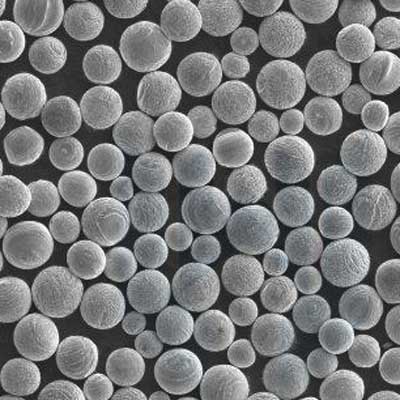
Spherical zirconium diboride powder is a kind of zirconium diboride powder which is spherical under scanning electron microscope (SEM).
| Spec. |
Purity |
Shape |
Available |
| ZrB2-DS053 |
≥99.5% |
Spherical |
15-53 um |
| ZrB2-DS105 |
≥99.5% |
Spherical |
45-105 um |
| ZrB2-DS150 |
≥99.5% |
Spherical |
45-150 um |
| Customizable |
≥99.5% |
Customizable |
Sieve as required |
Zirconium Diboride Nanopowder
Zirconium diboride nanopowder refers to zirconium diboride nanoparticles with an average particle size below 100 nm.
| Spec. |
Purity |
Shape |
Available. |
| ZrB2-SI050 |
≥99% |
Irregular |
Not available |
| ZrB2-SI800 |
≥99% |
Irregular |
Not available |
Related Products