Copper Powder Price & List
| Spec. |
Purity |
Shape |
Available |
| Cu-SS100 |
≥99% |
Spherical |
APS 100 nm |
| Cu-SS200 |
≥99% |
Spherical |
APS 200 nm |
| Cu-SS500 |
≥99% |
Spherical |
APS 500 nm |
| Cu-LS001 |
≥99.5% |
Spherical |
D50 1-2 um |
| Cu-LS003 |
≥99.5% |
Spherical |
D50 2-3 um |
| Cu-LS005 |
≥99.5% |
Spherical |
D50 4-6 um |
| Cu-LS010 |
≥99.5% |
Spherical |
D50 8-12 um |
| Cu-LF020 |
≥99.5% |
Flaky |
D50 18-24 um |
| Cu-LF030 |
≥99.5% |
Flaky |
D50 20-40 um |
| Cu-LF060 |
≥99.5% |
Flaky |
D50 40-80 um |
| Cu-LF100 |
≥99.5% |
Flaky |
D50 80-120 um |
| Cu-DS045 |
≥99.5% |
Spherical |
15- 45 um |
| Cu-DS053 |
≥99.5% |
Spherical |
15 - 53 um |
| Cu-DS105 |
≥99.5% |
Spherical |
45 - 105 um |
| Cu-DS150 |
≥99.5% |
Spherical |
45 - 150 um |
| Cu-MS100 |
≥99.5% |
Spherical |
-100 mesh |
| Cu-MS100U |
≥99.5% |
Spherical |
+100 mesh |
| Cu-MS200 |
≥99.5% |
Spherical |
-200 mesh |
| Cu-MS200U |
≥99.5% |
Spherical |
+200 mesh |
| Cu-MS325 |
≥99.5% |
Spherical |
-325 mesh |
| Cu-MS325U |
≥99.5% |
Spherical |
+325 mesh |
| Cu-MD100 |
≥99.5% |
Dendritic |
-100 mesh |
| Cu-MD100U |
≥99.5% |
Dendritic |
+100 mesh |
| Cu-MD200 |
≥99.5% |
Dendritic |
-200 mesh |
| Cu-MD200U |
≥99.5% |
Dendritic |
+200 mesh |
| Cu-MD325 |
≥99.5% |
Dendritic |
-325 mesh |
| Cu-MD325U |
≥99.5% |
Dendritic |
+325 mesh |
| Customizable |
≥99.5% |
Customizable |
Sieve as required |
Note: We provide customized service. If you don't find the powder you want, please send us an email directly. We can customize it according to your requirements.
Copper Powder
Copper powder is a powdery copper metal with a rose red or dark red appearance. It is one of the most important metal powders in the powder metallurgy industry and modern manufacturing. The performance of copper powder determines its diverse applications, and its main characteristics include:
Excellent conductivity and thermal conductivity:Among all metals, copper's conductivity and thermal conductivity are second only to silver, and its cost is much lower than silver, making copper powder the preferred conductive material.
Good ductility and plasticity:Copper powder particles are prone to deformation and bonding under pressure.
Antibacterial properties:Copper ions have natural bactericidal and bacteriostatic effects, which have unique applications in the medical and health fields.
Controllable powder properties:Its application performance is highly dependent on particle size and distribution, particle morphology (such as dendritic, spherical, irregular, flaky), and purity. Different shapes originate from different production processes.
Corrosion resistance:Stable in dry air, but slowly oxidizes on the surface in humid environments, producing basic copper carbonate (copper green).
Lower melting point:About 1083 ° C, much lower than tungsten and molybdenum, which makes its processing and sintering energy consumption lower.
According to different shapes,
copper powder can be divided into
spherical copper powder, irregular copper powder, dendritic copper powder, flake copper powder, etc. According to different particle sizes, copper powder can be divided into coarse copper powder, medium copper powder, fine copper powder, extremely fine copper powder, ultrafine copper powder and copper nanopowder.
Copper Powder Application
The copper powder we provide has the characteristics of high purity, uniform particle size, spherical shape. It can be applied to the following situations:
1. It can be used as alloy, catalyst, currency, etc;
2. Used to manufacture stainless steel and other corrosion-resistant alloys, such as nickel steel, nickel chromium steel and various non-ferrous metal alloys;
3. It can be used as hydrogenation catalyst, ceramic products, special chemical utensils, electronic circuits, glass coloring and preparation of nickel compounds;
4. Used for manufacturing stainless steel and various alloy steel;
5. It is widely used in aircraft, tank, warship, radar, missile, spaceship and civil industry in machine manufacturing, ceramic pigment, permanent magnet material, electronic remote control and other fields.
Spherical Copper Powder
Gas-atomized spherical copper powder refers to a metal powder produced by disintegrating a stream of molten copper liquid with high-pressure gas (usually nitrogen or air), followed by rapid cooling and solidification, resulting in a highly spherical appearance.
It is a key fundamental material in advanced manufacturing fields such as powder metallurgy and additive manufacturing (3D printing). Compared to copper powders produced by traditional electrolysis or other methods, its unique spherical morphology and excellent properties make it irreplaceable in high-tech applications.
Preparation Process: Gas Atomization Method
The gas atomization method is one of the mainstream methods for producing spherical metal powders. Its core process flow is as follows:
Melting:High-purity electrolytic copper or copper raw material is heated to a molten state (copper's melting point is approximately 1083°C) in a medium-frequency induction melting furnace under vacuum or a protective atmosphere (such as argon), and refining may be performed to remove impurities.
Atomization:This is the most critical step. The molten copper liquid is introduced into a specially designed atomization nozzle through a guide tube. At the nozzle, high-pressure (typically 2-10 MPa) gas (nitrogen, air, or argon) impacts the descending metal stream at high velocity from multiple angles.
Breakup and Spheroidization:The kinetic energy of the high-velocity gas stream breaks the continuous copper liquid stream into countless fine droplets. Due to the surface tension effect of the liquid metal, these droplets spontaneously contract into spheres during flight to minimize their surface area and energy.
Rapid Solidification:The fine spherical droplets exchange heat with the large volume of cooling gas as they fall through the atomization tower, rapidly solidifying into solid powder particles.
Collection and Classification:The solidified powder falls into a collection tank at the bottom. Subsequently, the powder undergoes screening and classification to obtain products within different particle size ranges (e.g., 15-53μm, 45-105μm, etc.), and may undergo blending to ensure batch uniformity.
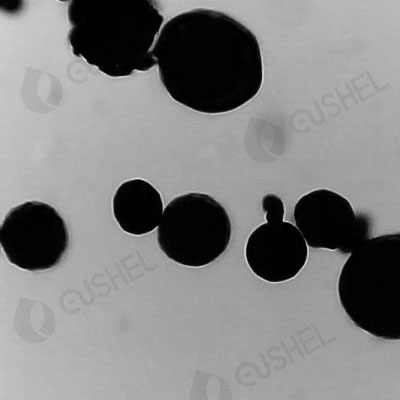
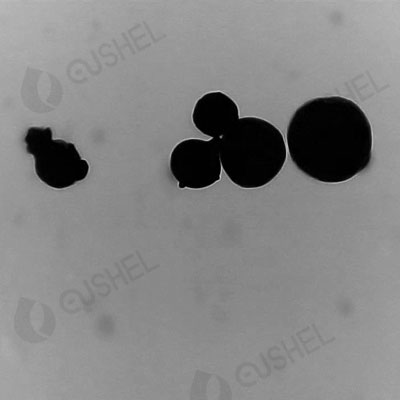
| Spec. |
Purity |
Partcile Size |
Application |
| Cu-DS045 |
≥99.5% |
15- 45 um |
3D printing (AM) / Thermal spraying / MIM |
| Cu-DS053 |
≥99.5% |
15 - 53 um |
3D printing (AM) / Thermal spraying / MIM |
| Cu-DS105 |
≥99.5% |
45 - 105 um |
3D printing (AM) / Thermal spraying / MIM |
| Cu-DS150 |
≥99.5% |
45 - 150 um |
3D printing (AM) / Thermal spraying / MIM |
| Customizable |
≥99.5% |
Sieve as required |
Industrial or scientific research |
Flaky Copper Powder
Flake copper powder refers to a copper metal powder with a flat, scaly structure produced through physical or chemical methods. Its aspect ratio (the ratio of particle diameter to thickness) is very large, typically reaching tens or even hundreds, and its morphology resembles that of "fish scales" or "flakes" at the micro or nano scale.
It is not a direct product of the preparation process but rather a deep-processed product made from pre-produced spherical, dendritic, or near-spherical copper powder as raw material through secondary processing (typically mechanical milling). This unique morphology endows it with properties and application areas distinctly different from those of spherical copper powder.
Preparation Process
The production of flake copper powder typically involves two steps: raw powder preparation and flaking processing.
Raw Powder Preparation:First, base copper powder needs to be produced. Common methods include:
Electrolysis Method:This is the most common method for producing the raw powder for flake copper powder. Electrolytic copper powder usually has a dendritic or loose, porous structure, making it easy to be flattened in subsequent processing.
Water Atomization Method:Water-atomized copper powder is mostly irregular or near-spherical with a rough surface, also suitable as a raw material for flaking.
Oxidation-Reduction Method:Loose copper powder is obtained by first oxidizing and then reducing the copper raw material.
Flaking Processing (Key Step):Mechanical Ball Milling:This is the most mainstream and economical production method. The raw copper powder is placed into a ball mill along with grinding media (e.g., steel balls) and process control agents (e.g., alcohol, stearic acid to prevent excessive cold welding and adhesion).
Process:During the rotation of the ball mill, the balls repeatedly impact, compress, shear, and grind the copper powder particles. This continuous plastic deformation force gradually flattens and extends the originally three-dimensional dendritic or near-spherical particles, eventually forming a flake structure.
Chemical Wet Milling:Raw powder and grinding media are added to organic solvents or specific solutions for wet milling, which can produce finer and more uniform flake powder, albeit at a higher cost.
Core Characteristics and Advantages
The properties of flake copper powder stem directly from its unique geometry:
Flake Structure and High Aspect Ratio:This is its most fundamental characteristic. The particles are flat, with a surface area much larger than that of spherical powder of the same mass.
High Hiding Power and Shielding Properties:Flake particles act like countless tiny mirrors, overlapping layer upon layer, effectively reflecting and shielding light and electromagnetic waves. This is the basis for its use in anti-corrosion coatings and conductive coatings.
Excellent Anisotropic Electrical and Thermal Conductivity:Conductivity is generally poor perpendicular to the flake plane, but parallel to the flake plane, particles easily connect to form continuous conductive/thermal networks. When aligned parallel within a coating, it can form an efficient planar conductive layer.
Metallic Luster and Decorative Effect:Flake powder exhibits a strong specular reflection effect, producing a bright metallic luster. It is often used in decorative coatings and inks to replace gold powder or create bronze effects.
"Lotus Leaf" Effect and Hydrophobicity:After special surface modification (e.g., with silane coupling agents), coatings prepared with flake copper powder can exhibit hydrophobic or even superhydrophobic properties.
Good Compatibility with Matrix Materials:The flat structure allows it to bond more tightly with matrix materials such as resins and plastics, improving the compactness and adhesion of the coating.
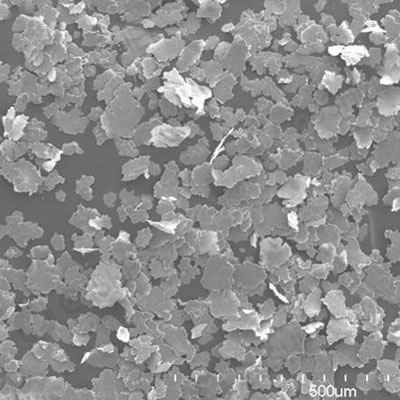
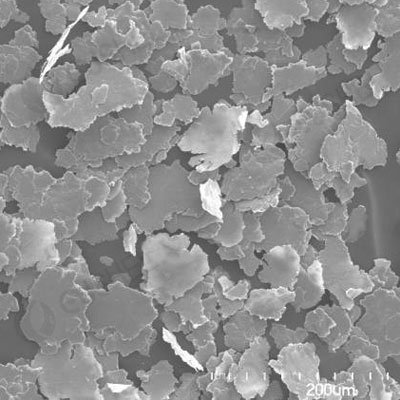
| Spec. |
Purity |
Partcile Size |
Application |
| Cu-LF020 |
≥99.5% |
≤20 um |
Industrial or scientific research |
| Cu-LF030 |
≥99.5% |
D50 20-40 um |
Industrial or scientific research |
| Cu-LF060 |
≥99.5% |
D50 40-80 um |
Industrial or scientific research |
| Cu-LF100 |
≥99.5% |
D50 80-120 um |
Industrial or scientific research |
| Customizable |
≥99.5% |
Sieve as required |
Industrial or scientific research |
Dendritic Copper Powder
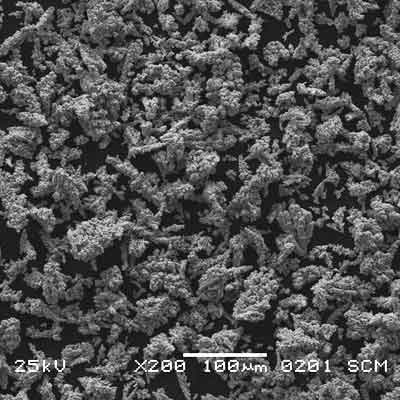
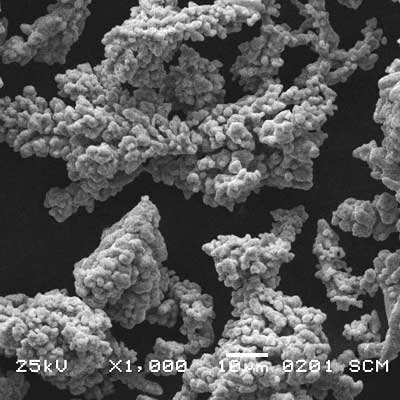
Dendritic copper powder refers to a type of copper powder with a complex three-dimensional branched structure, resembling coral or tree branches. The particles of this powder consist of a main trunk, branches, and finer secondary branches, possessing an enormous specific surface area and abundant active surface sites.
It is a typical and direct product of the electrolytic process for producing copper powder. Its unique morphology is determined by specific kinetic conditions during the electrolysis process (such as high current density, copper ion concentration polarization). The dendritic structure is its primary form, unlike flake copper powder which is obtained through secondary processing.
Preparation Process: Electrolysis Method
Dendritic copper powder is primarily produced through the electrolysis method, which is its most common and economical preparation method.
Basic Principle:A copper sulfate solution is used as the electrolyte, and direct current is applied. The reduction reaction of copper ions (Cu²⁺ + 2e⁻ → Cu) occurs at the cathode (usually stainless steel or titanium plate), depositing metallic copper.
Formation Mechanism of Dendritic Structure (Key):Concentration Polarization and Diffusion Control: Under high current density, copper ions on the cathode surface are rapidly consumed, causing the copper ion concentration near the cathode to be much lower than in the bulk solution. This concentration gradient forms a diffusion field.
Preferential Growth (Tip Effect):On the initial tiny copper crystal nuclei formed on the cathode surface, those "tips" or "protrusions" at prominent positions (such as edges, defects) experience a stronger electric field and have shorter ion diffusion paths, making it easier to attract and capture copper ions from the solution. Therefore, the deposition reaction preferentially occurs at these tips, causing them to grow outward and forward more rapidly, forming the main trunk.
Branching and Secondary Branch Formation:During the growth of the main trunk, new microscopic protrusions form on its surface, which become new preferential growth points, thus developing secondary branches. This process repeats continuously, ultimately forming the complex three-dimensional dendritic structure.
Post-processing: After electrolytic deposition is complete, the loose copper deposit is scraped from the cathode, then washed, dried, crushed, and sieved to obtain dendritic copper powder of different particle sizes.
Process Characteristics:Advantages: High product purity (can reach over 99.7%), typical dendritic morphology, enormous specific surface area, relatively mature production process.
Disadvantages: Low apparent density, poor flowability, and potential wastewater generation during production requiring treatment.
Core Characteristics and Advantages
The properties of dendritic copper powder are entirely determined by its unique three-dimensional porous structure:
Enormous Specific Surface Area:This is its core characteristic. The complex branched structure gives it a specific surface area far greater than that of spherical or flake powders of the same particle size, providing vast space for chemical reactions and physical adsorption.
High Porosity and Interlocking:There are numerous pores within and between the particles. When pressure is applied, the fine branches can interpenetrate and hook together, creating a strong mechanical interlocking effect.
Excellent Sintering Activity:The huge specific surface area and abundance of surface atoms imply high surface energy. During the sintering process in powder metallurgy, this high activity allows rapid atomic diffusion and neck growth between particles at relatively low temperatures, promoting densification and thereby increasing the strength and density of the final product.
Good Compressibility:During press forming, its soft, porous structure readily undergoes plastic deformation and branch fracture, allowing it to be compressed into a compact with relatively high strength.
High Surface Activity and Catalytic Potential: The abundance of edges, corners, and defect sites gives it high catalytic activity in chemical reactions.
| Spec. |
Purity |
Partcile Size |
Application |
| Cu-MD100 |
≥99.5% |
-100 mesh |
Industrial or scientific research |
| Cu-MD100U |
≥99.5% |
+100 mesh |
Industrial or scientific research |
| Cu-MD200 |
≥99.5% |
-200 mesh |
Industrial or scientific research |
| Cu-MD200U |
≥99.5% |
+200 mesh |
Industrial or scientific research |
| Cu-MD325 |
≥99.5% |
-325 mesh |
Industrial or scientific research |
| Cu-MD325U |
≥99.5% |
+325 mesh |
Industrial or scientific research |
| Customizable |
≥99.5% |
Sieve as required |
Industrial or scientific research |
Ultrafine Copper Powder
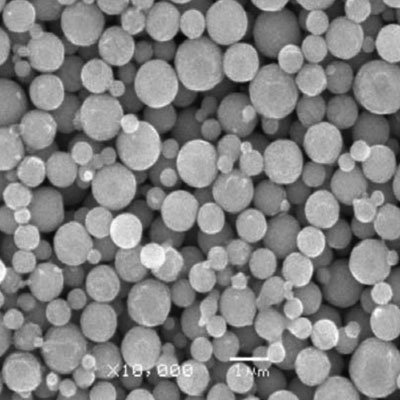
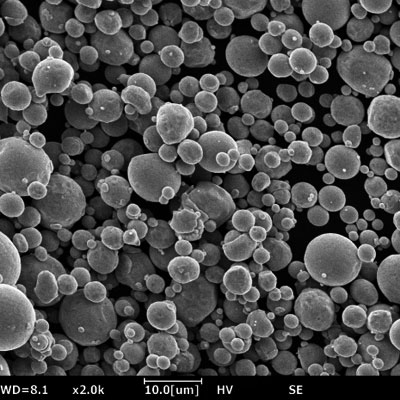
Physically produced ultrafine spherical copper powder refers to copper powder primarily relying on physical means (such as kinetic energy, thermal energy) to convert bulk copper raw materials into powder with a spherical appearance, uniform particle size distribution, typically between 0.1μm and 10μm. The core feature of these methods is that no chemical reactions occur during the preparation process; the morphological change of copper is achieved through melting-dispersion-condensation or solid-state direct crushing. They are key technologies for producing high-performance, low-oxygen spherical copper powder, especially suitable for cutting-edge fields with stringent requirements on powder purity, sphericity, and particle size.
Main Preparation Processes
Gas Phase Evaporation-Condensation MethodPrinciple: In a high vacuum or inert atmosphere, the copper raw material is heated to its evaporation temperature, generating copper vapor. The copper vapor rapidly nucleates and grows into ultrafine spherical or near-spherical particles upon encountering a low-temperature gas flow or a cold wall.
Core Characteristics and Advantages
Due to the advanced preparation processes, this type of copper powder exhibits outstanding comprehensive properties:
Ultrafine Particle Size and Narrow Distribution:The small and concentrated particle size is crucial for manufacturing high-precision parts with superior surface finish.
Extremely High Sphericity:The particles are nearly perfect spheres with minimal defects like satellite particles or hollow powder.
Excellent Flowability:The extreme sphericity and smooth surface endow the powder with superior flow properties, which is essential for stable powder spreading in 3D printing and uniform filling in powder metallurgy.
High Purity and Low Oxygen Content:The entire process is completed under vacuum or inert gas protection, effectively avoiding oxidation and contamination. Oxygen content can typically be controlled to a few hundred ppm or even lower.
High Tap Density:The close packing of spherical particles results in high tap density, conducive to producing high-density final products.
Large Specific Surface Area:The ultrafine particle size implies a vast specific surface area, giving it unique advantages in fields like catalysis and conductivity.
| Spec. |
Purity |
Shape |
Partcile Size |
Application |
| Cu-LS001 |
≥99.5% |
Spherical |
D50 1-2 um |
Industrial or scientific research |
| Cu-LS003 |
≥99.5% |
Spherical |
D50 2-3 um |
Industrial or scientific research |
| Cu-LS005 |
≥99.5% |
Spherical |
D50 4-6 um |
Industrial or scientific research |
| Cu-LS010 |
≥99.5% |
Spherical |
D50≤ 10 um |
Industrial or scientific research |
Nano Copper Powder
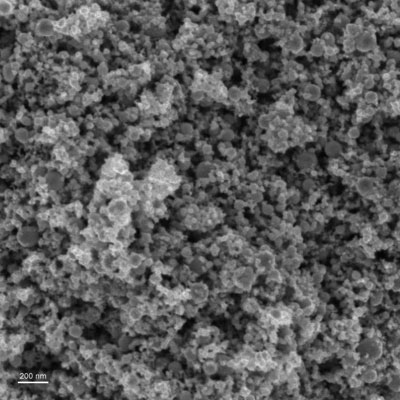
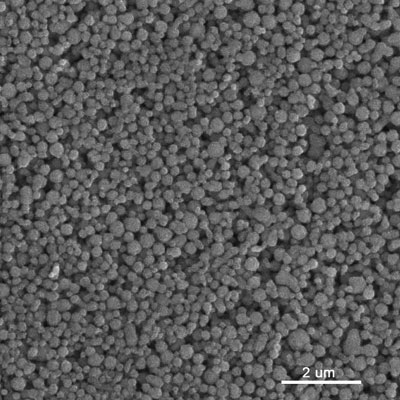
Nano copper powder mainly refers to copper nanoparticles with an average particle size of less than 100 nm. We mainly produce and provide submicron nano copper powder (100-1000 nm) for industrial application. The details are as follows:
| Spec. |
Purity |
Shape |
Partcile Size |
Application |
| Cu-SS100 |
≥99% |
Spherical |
APS 100 nm |
Industrial or scientific research |
| Cu-SS200 |
≥99% |
Spherical |
APS 200 nm |
Industrial or scientific research |
| Cu-SS500 |
≥99% |
Spherical |
APS 500 nm |
Industrial or scientific research |
Related Products
Copper nanopowder, also known as copper nanoparticle or nano copper powder. It refers to the ultrafine copper powder with the particle size of 1-100nm.
https://www.fusnano.com/nanopowder/copper-nanopowder.html
Copper silver alloy powder refers to a binary alloy powder made of copper and silver in different proportions.
https://www.fusnano.com/alloy/copper-silver-alloy-powder.html
Copper nickel alloy powder refers to a binary alloy powder made of copper and nickel in different proportions.
https://www.fusnano.com/alloy/copper-nickel-alloy-powder.html
Copper manganese alloy powder refers to a copper alloy powder made of copper and manganese in different proportions.
https://www.fusnano.com/alloy/copper-manganese-alloy-powder.html
Copper oxide powder is a black oxide ceramic powder of copper.
https://www.fusnano.com/oxide/copper-oxide-powder.html