Spherical Copper Powder Price & List
| Spec. |
Shape |
Particle Size |
Application |
| Cu-DS045 |
Spherical |
15-45 um |
3D printing / additive manufacturing |
| Cu-DS053 |
Spherical |
15-53 um |
3D printing / additive manufacturing |
| Cu-DS105 |
Spherical |
45-105 um |
3D printing / additive manufacturing |
| Cu-DS150 |
Spherical |
45-150 um |
3D printing / additive manufacturing |
| Customizable |
Spherical |
Customizable |
3D printing / additive manufacturing |
Note: We provide customized service. If you don't find the powder you want, please send us an email directly. We can customize it according to your requirements.
Spherical Copper Powder
Copper powder is a metallic copper in the form of a powder, typically appearing purplish-red or dark red (ultrafine copper powder may appear purplish-black). It is one of the most widely used and historically longest-used metal powders. Due to its excellent electrical conductivity, thermal conductivity, ductility, and antibacterial properties, it plays an indispensable role in various fields such as powder metallurgy, electrical and electronic engineering, chemical catalysis, and friction materials.
Basic Characteristics
Physical Properties:Excellent electrical and thermal conductivity: Second only to silver, it is one of the most cost-effective conductive and thermal conductive materials.
Good ductility: Bulk copper has excellent plasticity, but its properties in powder form are influenced by particle size and shape.
Antibacterial properties: Copper ions have a broad-spectrum bactericidal effect, making them widely used in antibacterial materials.
Chemical Properties:Relatively stable at room temperature: It is stable in dry air, but in humid air, its surface slowly oxidizes, forming green basic copper carbonate (verdigris).
Prone to oxidation: Under heating conditions, it can rapidly react with oxygen to form black copper oxide (CuO) or red cuprous oxide (Cu2O).
Spherical Copper Powder
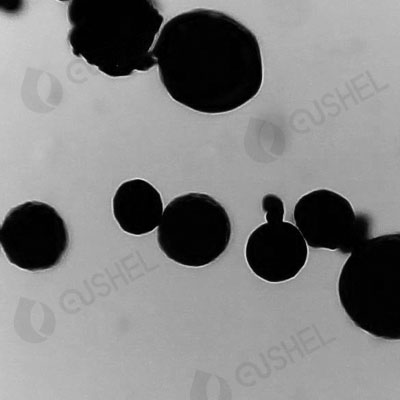
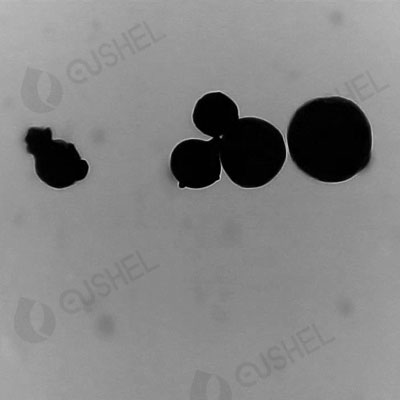
Spherical copper powder refers to metallic copper powder with a regular spherical particle morphology produced through special processes. It is a high-end product among copper powders, which not only perfectly retains the excellent properties of metallic copper such as electrical conductivity, thermal conductivity, and antibacterial efficacy, but also possesses extremely high fluidity, high tap density, and low specific surface area due to its unique spherical morphology. It is primarily used in cutting-edge fields with stringent requirements for powder performance, such as electronic components, additive manufacturing (3D printing), and conductive pastes.
Basic Characteristics
Advantages of Physical Morphology:Excellent Fluidity: Spherical particles function like miniature ball bearings, offering minimal flow resistance. This is crucial for automated production (e.g., powder spreading in 3D printing, automatic mold filling in powder metallurgy), ensuring high product consistency and quality.
High Tap Density: Spherical particles achieve the tightest packing, resulting in higher initial density of green compacts or printed parts. This leads to superior density, electrical conductivity, and mechanical properties in the sintered final product.
Low Specific Surface Area and Low Oxygen Content: For the same mass, spherical powder has a much smaller total surface area than irregular powder, meaning less oxygen is adsorbed on the surface. Low oxygen content is crucial for ensuring the high conductivity and reliability of the final product, particularly electronic components.
Smooth Surface: The particles have a smooth surface and few internal pores, which is beneficial for forming a dense structure during subsequent sintering or melting processes.
Chemical Properties:
Inherits the core chemical properties of metallic copper: excellent electrical/thermal conductivity and antibacterial efficacy. The low oxygen content resulting from its spherical morphology gives it better chemical stability than conventional
copper powder.
Main Preparation Methods
Gas Atomization:This is the most mainstream and economical method for producing spherical copper powder. Under vacuum or a protective atmosphere, molten copper liquid is passed through a guide nozzle and broken up and atomized into fine droplets by a ultra-high-speed gas stream (e.g., nitrogen or argon). The droplets spheroidize and cool into spherical powder during flight. The particle size can be controlled by adjusting parameters.
Plasma Atomization/Spheroidization:Atomization: Copper metal wire is fed into a plasma torch, where it is instantly melted and atomized, directly yielding spherical powder.
Spheroidization:More commonly,
irregular copper powder is fed into a radio frequency plasma torch. The particles melt and spheroidize under surface tension, resulting in high-purity spherical powder. This method effectively reduces oxygen content.
Centrifugal Atomization:Molten copper droplets fall onto a high-speed rotating disk. They are ejected by centrifugal force, forming droplets that spheroidize and cool. This method can produce relatively coarse spherical powder.
Spherical Copper Powder Application
Spherical copper powder applications primarily focus on high-precision, high-performance premium markets. The specifics are as follows:
Electronic Packaging and Conductive Materials (Core Application):Conductive Adhesives/Pastes: A key filler for preparing high-performance conductive adhesives and internal electrode pastes for MLCC (Multilayer Ceramic Capacitors). Its spherical morphology ensures good printability of the paste and uniformity of the conductive network after sintering, making it the preferred choice for replacing silver paste to reduce costs.
Thermal Conductive Adhesives/Thermal Grease: Used for heat dissipation in high-end chips like CPUs and GPUs. The high packing density of spherical powder provides a superior heat conduction path.
Electronic Packaging: Used to prepare metal matrix composites (e.g., copper-tungsten, copper-diamond) with high thermal conductivity and low thermal expansion coefficients for power semiconductor packaging.
Metal Additive Manufacturing (3D Printing):Used in Selective Laser Melting (SLM) technology to directly manufacture pure copper or copper alloy components with complex internal structures.
Application Prospects:Heat Sinks: Printing integrated, efficient heat sinks with complex internal channels for high-power electronic equipment and aerospace vehicles.
Electrical Components: Manufacturing oxygen-free copper electrodes, induction coils, etc.
Artwork and Design: Utilizing its unique purplish-red hue for creative manufacturing.
Powder Injection Molding (MIM):Spherical copper powder is an ideal raw material for the MIM process, used to manufacture small, complex, and high-precision copper parts, such as watch cases, eyeglass frames, micro gears, and medical device components.
Lubricants and Friction Materials:Spherical copper powder is added to lubricants or brake materials to provide anti-wear, repair, and thermal conductivity enhancement functions.
| Spec. |
Shape |
Particle Size |
Application |
| Cu-DS045 |
Spherical |
15-45 um |
3D printing / additive manufacturing |
| Cu-DS053 |
Spherical |
15-53 um |
3D printing / additive manufacturing |
| Cu-DS105 |
Spherical |
45-105 um |
3D printing / additive manufacturing |
| Cu-DS150 |
Spherical |
45-150 um |
3D printing / additive manufacturing |
| Customizable |
Spherical |
Customizable |
3D printing / additive manufacturing |
Related Products
https://www.fusnano.com/am/spherical-cobalt-powder.htmlSpherical cobalt powder is a kind of
cobalt powder which is spherical under the electron scanning microscope (SEM). Spherical cobalt powder can be produced by atomization production process, so it is also often called atomization spherical cobalt powder. In addition, spherical cobalt powder can also be produced by plasma spheroidization. Spherical cobalt powder produced by plasma spheroidization has high quality, smooth and clean surface of powder particles, few hollow powder and satellite powder, and few gas inclusions.
https://www.fusnano.com/am/spherical-chromium-powder.htmlSpherical chromium powder refers to the
chromium powder which is spherical under the scanning electron microscope (SEM). As chromium powder belongs to refractory metal powder, it is mainly produced by plasma spheroidization technology.
https://www.fusnano.com/am/spherical-molybdenum-powder.htmlSpherical molybdenum powder is the
molybdenum powder which is spherical under scanning electron microscope (SEM). Spherical molybdenum powder is generally produced by plasma spheroidization or plasma rotating electrode equipment.
https://www.fusnano.com/am/spherical-nickel-powder.htmlSpherical nickel powder is a kind of
nickel powder which is spherical under scanning electron microscope (SEM). Spherical nickel powder is widely used in some occasions with high requirements for convective mobility because of its good fluidity.
https://www.fusnano.com/am/spherical-tantalum-powder.htmlSpherical tantalum powder is
tantalum powder which is spherical under scanning electron microscope (SEM). Compared with irregular tantalum powder, the production cost of spherical tantalum powder is higher. It is mainly produced by plasma rotating electrode method and induction plasma spheroidization process.
https://www.fusnano.com/am/spherical-titanium-powder.htmlSpherical titanium powder refers to the pure titanium powder that appears as a spherical shape under scanning electron microscopy (SEM). It is mainly produced through atomization, plasma rotating electrode, and radio frequency plasma spheroidization processes.
https://www.fusnano.com/am/spherical-vanadium-powder.htmlSpherical vanadium powder refers to the
vanadium powder which is spherical under scanning electron microscope (SEM). Spherical vanadium powder is mainly produced by plasma rotating electrode method or induction plasma spheroidization process.