Spherical Molybdenum Powder Price & List
| Spec. |
Shape |
Particle Size |
Application |
| Mo-DS045 |
Spherical |
15-45 um |
3D printing / additive manufacturing |
| Mo-DS053 |
Spherical |
15-53 um |
3D printing / additive manufacturing |
| Mo-DS105 |
Spherical |
45-105 um |
3D printing / additive manufacturing |
| Mo-DS150 |
Spherical |
45-150 um |
3D printing / additive manufacturing |
| Customizable |
Spherical |
Customizable |
3D printing / additive manufacturing |
Note: We provide customized service. If you don't find the powder you want, please send us an email directly. We can customize it according to your requirements.
Spherical Molybdenum Powder
Molybdenum powder is a metallic molybdenum in the form of a powder, typically dark gray or gray-black in appearance. It is an important refractory metal powder with a wide range of applications in industrial fields such as metallurgy, electronics, chemical engineering, and aerospace due to its high melting point, high strength, good thermal and electrical conductivity, and relatively low thermal expansion coefficient.
Basic Characteristics
Physical Properties:High melting point: Up to 2623°C, making it one of the primary refractory metals.
High thermal conductivity: Good thermal conductivity, superior to many steel materials.
Low thermal expansion coefficient: Small dimensional changes when heated, resulting in good stability.
High strength: Maintains relatively high strength even at elevated temperatures.
Chemical Properties:Stable at room temperature:
Molybdenum is stable in air at room temperature and not easily oxidized.
Prone to oxidation at high temperatures: In air above 600°C, it oxidizes rapidly, forming molybdenum trioxide (MoO₃). This oxide is volatile, so high-temperature use of molybdenum requires a vacuum or protective atmosphere.
Corrosion resistance: Exhibits some resistance to certain acids, molten glass, and molten metals.
Spherical Molybdenum Powder
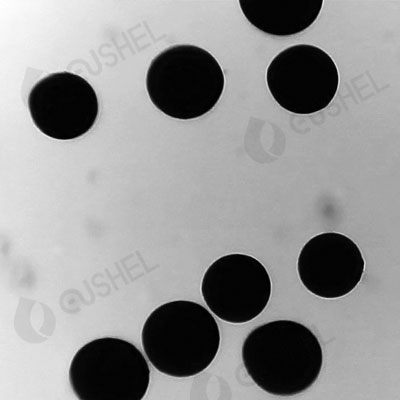
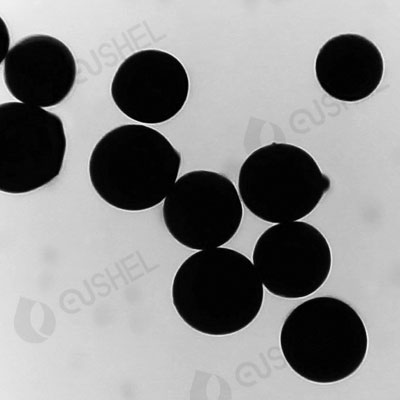
Spherical molybdenum powder refers to metallic molybdenum powder with a regular spherical particle morphology produced through special processes. It is a high-end product among molybdenum powders, which not only retains the excellent properties of metallic molybdenum, such as high melting point, high strength, and good thermal and electrical conductivity, but also possesses extremely high fluidity and high packing density due to its unique spherical morphology. It is primarily used in cutting-edge fields with stringent requirements for powder performance, such as electronic devices, additive manufacturing (3D printing), and thermal spraying.
Basic Characteristics
Advantages of Physical Morphology:Excellent Fluidity: Spherical particles have low inter-particle friction and can spread evenly like a fluid. This is crucial for automated production processes (e.g., 3D printing, plasma spraying), ensuring product consistency and reliability.
High Tap Density: Spherical particles achieve the tightest packing, resulting in higher green density after forming, more controllable sintering shrinkage, and superior density and mechanical properties in the final product.
Low Specific Surface Area and Low Oxygen Content: For the same mass, spherical powder has a much smaller total surface area than irregular powder, meaning less oxygen is adsorbed on the surface. Low oxygen content is crucial for improving the purity, ductility, and high-temperature performance of the final product.
Smooth Surface and Uniform Composition: The particles have a smooth surface and are pore-free internally, which facilitates the formation of a uniform melt pool in subsequent processing or enables a dense sintered structure.
Chemical Properties:Inherits the core chemical properties of metallic molybdenum: high melting point, high-temperature strength, and good thermal and electrical conductivity. Its chemical stability is further enhanced after spheroidization (due to reduced oxygen content).
Main Preparation Methods
Plasma Spheroidization:Currently the most mainstream process. Irregular, angular conventional
molybdenum powder is used as raw material and fed into the high-temperature zone (core temperature can exceed 10,000°C) of a radio frequency (RF) or direct current (DC) plasma torch. The particles instantly absorb heat and melt, shrinking into spherical droplets under surface tension, and then rapidly cool and solidify into spherical powder during flight.
Advantages: Can upgrade conventional molybdenum powder to high-performance spherical powder, effectively reduces oxygen content, and yields good sphericity.
Disadvantages: High energy consumption.
Plasma Rotating Electrode Process (PREP):Principle: A high-purity molybdenum metal electrode rod is rotated at high speed as the anode, while its end face is bombarded by a plasma torch. The molten droplets are ejected by centrifugal force, spheroidize, and cool.
Advantages: The powder has extremely high purity, almost no hollow particles, and perfect sphericity.
Disadvantages: Low yield, very high cost, mainly used for special high-demand applications.
Gas Atomization:Principle: Under vacuum or a protective atmosphere, molten molybdenum liquid is passed through a guide nozzle and broken up and atomized into fine droplets by a ultra-high-speed gas stream (e.g., argon). The droplets spheroidize and then cool into spherical powder.
Advantages: Suitable for large-scale continuous production.
Challenges: The extremely high melting point of molybdenum places extremely stringent requirements on crucible materials and atomization equipment, making its application less common than the methods mentioned above.
Spherical Molybdenum Powder Application
Spherical molybdenum powder primarily focuses on high-end manufacturing and cutting-edge technological fields. The specifics are as follows:
Electronic Components and Semiconductors (Core Application):Molybdenum Sputtering Targets: A key material for preparing thin films such as thin-film transistors (TFTs) and semiconductor barrier layers. Targets made from spherical molybdenum powder have high density and uniform composition, significantly improving coating quality and uniformity. They are widely used in flat-panel displays and semiconductor chip manufacturing.
Heat Dissipation Components: Used in packaging high-power semiconductor devices, leveraging its high thermal conductivity and matched thermal expansion coefficient.
Metal Additive Manufacturing (3D Printing):Used in Selective Laser Melting (SLM) technology to directly manufacture complex-structured pure molybdenum or molybdenum alloy components.
Application Prospects:
Aerospace: Manufacturing high-temperature resistant components such as rocket engine nozzles and thermal insulation shields.
High-Temperature Furnace Industry: Printing customized heating elements, support components, etc.
Military Sector: For components requiring high-temperature resistance and impact resistance.
High-Performance Thermal Spray Coatings:Using Atmospheric Plasma Spraying (APS) technology, spherical molybdenum powder is fused onto substrate surfaces (e.g., automotive piston rings, engine valves) to form extremely wear-resistant and corrosion-resistant coatings, significantly extending component service life.
High-End Powder Metallurgy:Using the Metal Injection Molding (MIM) process to manufacture small, complex, and high-precision molybdenum parts, such as radiation shielding components for medical devices and boats/crucibles for the semiconductor industry.
| Spec. |
Shape |
Particle Size |
Application |
| Mo-DS045 |
Spherical |
15-45 um |
3D printing / additive manufacturing |
| Mo-DS053 |
Spherical |
15-53 um |
3D printing / additive manufacturing |
| Mo-DS105 |
Spherical |
45-105 um |
3D printing / additive manufacturing |
| Mo-DS150 |
Spherical |
45-150 um |
3D printing / additive manufacturing |
| Customizable |
Spherical |
Customizable |
3D printing / additive manufacturing |
Related Products
https://www.fusnano.com/am/spherical-cobalt-powder.htmlSpherical cobalt powder is a kind of
cobalt powder which is spherical under the electron scanning microscope (SEM). Spherical cobalt powder can be produced by atomization production process, so it is also often called atomization spherical cobalt powder. In addition, spherical cobalt powder can also be produced by plasma spheroidization. Spherical cobalt powder produced by plasma spheroidization has high quality, smooth and clean surface of powder particles, few hollow powder and satellite powder, and few gas inclusions.
https://www.fusnano.com/am/spherical-chromium-powder.htmlSpherical chromium powder refers to the
chromium powder which is spherical under the scanning electron microscope (SEM). As chromium powder belongs to refractory metal powder, it is mainly produced by plasma spheroidization technology.
https://www.fusnano.com/am/spherical-copper-powder.htmlSpherical copper powder refers to
copper powder which is spherical under scanning electron microscope (SEM). Compared with irregular copper powder, spherical copper powder has excellent fluidity. Micron grade spherical copper powder above 10 um is mainly produced through gas atomization technology, which can control the required particle size through a mesh screen. Spherical copper powder below 10 um is mainly produced through special processes.
https://www.fusnano.com/am/spherical-nickel-powder.htmlSpherical nickel powder is a kind of
nickel powder which is spherical under scanning electron microscope (SEM). Spherical nickel powder is widely used in some occasions with high requirements for convective mobility because of its good fluidity.
https://www.fusnano.com/am/spherical-tantalum-powder.htmlSpherical tantalum powder is
tantalum powder which is spherical under scanning electron microscope (SEM). Compared with irregular tantalum powder, the production cost of spherical tantalum powder is higher. It is mainly produced by plasma rotating electrode method and induction plasma spheroidization process.
https://www.fusnano.com/am/spherical-titanium-powder.htmlSpherical titanium powder refers to the pure titanium powder that appears as a spherical shape under scanning electron microscopy (SEM). It is mainly produced through atomization, plasma rotating electrode, and radio frequency plasma spheroidization processes.
https://www.fusnano.com/am/spherical-vanadium-powder.htmlSpherical vanadium powder refers to the
vanadium powder which is spherical under scanning electron microscope (SEM). Spherical vanadium powder is mainly produced by plasma rotating electrode method or induction plasma spheroidization process.