Spherical Vanadium Powder Price & List
| Spec. |
Shape |
Particle Size |
Application |
| V-DS045 |
Spherical |
15-45 um |
3D printing / additive manufacturing |
| V-DS053 |
Spherical |
15-53 um |
3D printing / additive manufacturing |
| V-DS105 |
Spherical |
45-105 um |
3D printing / additive manufacturing |
| V-DS150 |
Spherical |
45-150 um |
3D printing / additive manufacturing |
| Customizable |
Spherical |
Customizable |
3D printing / additive manufacturing |
Note: We provide customized service. If you don't find the powder you want, please send us an email directly. We can customize it according to your requirements.
Spherical Vanadium Powder
Vanadium powder is a metallic vanadium in the form of a powder, typically appearing as a silver-gray or light gray powder. It is an important strategic metal raw material and plays an irreplaceable role in high-tech industries and metallurgical fields due to its unique physical and chemical properties.
Basic Characteristics
Physical Properties:
High melting point: Approximately 1910°C, enabling its application in high-temperature environments.
Good ductility: Bulk metallic vanadium has good plasticity, but in powder form, it exhibits brittleness.
Body-centered cubic structure: This is the basis for its role as an excellent alloying element.
Chemical Properties:
Passivation: At room temperature,
vanadium is very stable in air, forming a dense oxide film (passivation layer) on the surface, which resists corrosion from water, dilute acids, and alkalis.
High-temperature reactivity: At high temperatures, vanadium powder can react vigorously with non-metallic elements such as oxygen, nitrogen, and carbon, forming corresponding compounds. This is also the key to its function as an additive in metallurgy.
Spherical Vanadium Powder
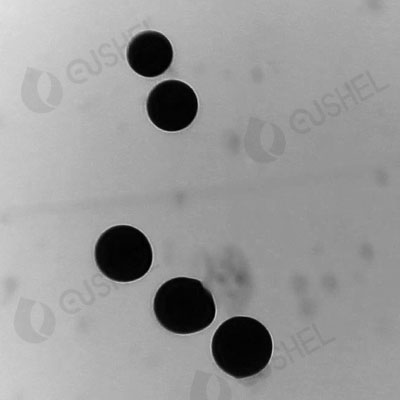
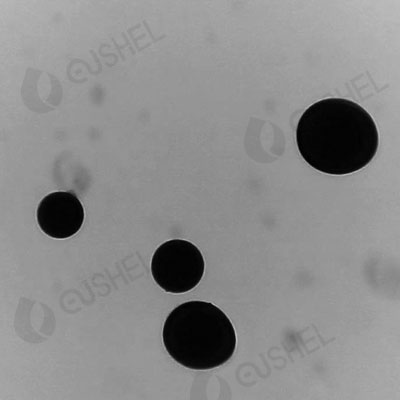
Spherical vanadium powder refers to metallic vanadium powder with a regular spherical particle morphology produced through special processes. Compared to irregularly shaped vanadium powder, its spherical morphology grants it superior physical properties. It is primarily used in cutting-edge technical fields such as high-performance additive manufacturing (3D printing) and high-end powder metallurgy for manufacturing vanadium alloys or pure vanadium components with special properties.
Basic Characteristics
Advantages of Physical Morphology:High Fluidity: Spherical particles have low inter-particle friction, resulting in excellent fluidity, which facilitates uniform powder spreading during 3D printing and ensures the quality of the formed parts.
High Packing Density: Spherical particles can pack more densely, leading to higher green density after printing or sintering, fewer internal defects, and consequently improved mechanical properties of the final product.
Low Specific Surface Area: For the same mass, spherical powder has a smaller total surface area than irregular powder. This means lower adsorbed oxygen content on the surface, helping to reduce oxidation during high-temperature processing and improving product purity and performance consistency.
Smooth Surface, Few Internal Pores: This favors the formation of dense melt pools during melting (e.g., in 3D printing) and reduces defects like pores.
Chemical Properties:It shares the same properties as conventional vanadium powder, such as high-temperature activity and passivation. However, its chemical performance in practical applications depends more on the powder's purity and the content of interstitial elements like oxygen and nitrogen.
Main Preparation Methods
The difficulty and cost of producing spherical vanadium powder are far higher than for metals like nickel or titanium, so the methods are relatively limited and primarily involve high-end atomization technologies.
Plasma Rotating Electrode Process (PREP):Principle: A high-purity vanadium metal electrode rod is rotated at high speed as the anode, while a plasma torch acts as the cathode to bombard the end of the rod, melting it into droplets. The droplets are ejected by centrifugal force, spheroidize, and cool.
Advantages: Produces powder with high purity, good sphericity, a smooth surface, and almost no hollow particles. It is one of the main methods for producing high-demand spherical vanadium powder.
Disadvantages: Low yield and very high cost.
Plasma Atomization:Principle: Vanadium metal wire or coarse powder is fed into the center of a plasma torch, where it is instantly melted and atomized into fine droplets. The droplets spheroidize under surface tension and cool into spherical powder.
Advantages: Good retention of powder purity, excellent sphericity, suitable for producing fine powder.
Disadvantages: High raw material requirements, high energy consumption, and high cost.
Electron Beam Atomization:Principle: In a high vacuum environment, an electron beam bombards vanadium raw material, causing it to melt and drip, or it is melted in a crucible and flowed through a guide nozzle, where it is disrupted and atomized into spherical powder by the electron beam.
Advantages: Can be performed under extremely high vacuum, effectively controlling impurities, especially interstitial elements (O, N).
Disadvantages: Complex equipment, huge investment, and is one of the most expensive methods.
Spherical Vanadium Powder Application
Due to its extremely high cost, the application of spherical vanadium powder is currently primarily concentrated in scientific research and cutting-edge fields that have extreme requirements for material performance.
Metal Additive Manufacturing (3D Printing):A core application direction. It is used in technologies such as Selective Laser Melting (SLM) or Electron Beam Melting (EBM) to directly manufacture complex-structured pure vanadium or vanadium alloy components.
Application Prospects:Nuclear Industry: Manufacturing structural components or cladding materials for nuclear reactors that are irradiation-resistant and have a low neutron absorption cross-section.
Aerospace: Printing vanadium-titanium alloy or vanadium-aluminum master alloy parts with characteristics of high strength, high-temperature resistance, and corrosion resistance.
Superconducting Materials: Used for manufacturing precursors of superconducting materials with specific structures.
High-End Powder Metallurgy:As a high-performance additive, it is used in advanced processes like Hot Isostatic Pressing (HIP) or Spark Plasma Sintering (SPS) to prepare high-density, high-performance vanadium alloys or composite materials for key components under special working conditions.
Coating Materials:Using plasma spraying technology, spherical vanadium powder is melted and coated onto a substrate surface to form corrosion-resistant and wear-resistant coatings.
Scientific Research:Serves as a model material for studying the melting and solidification behavior of metal powders in additive manufacturing processes, as well as the intrinsic properties of vanadium-based materials.
| Spec. |
Shape |
Particle Size |
Application |
| V-DS045 |
Spherical |
15-45 um |
3D printing / additive manufacturing |
| V-DS053 |
Spherical |
15-53 um |
3D printing / additive manufacturing |
| V-DS105 |
Spherical |
45-105 um |
3D printing / additive manufacturing |
| V-DS150 |
Spherical |
45-150 um |
3D printing / additive manufacturing |
| Customizable |
Spherical |
Customizable |
3D printing / additive manufacturing |
Related Products
https://www.fusnano.com/am/spherical-cobalt-powder.htmlSpherical cobalt powder is a kind of
cobalt powder which is spherical under the electron scanning microscope (SEM). Spherical cobalt powder can be produced by atomization production process, so it is also often called atomization spherical cobalt powder. In addition, spherical cobalt powder can also be produced by plasma spheroidization. Spherical cobalt powder produced by plasma spheroidization has high quality, smooth and clean surface of powder particles, few hollow powder and satellite powder, and few gas inclusions.
https://www.fusnano.com/am/spherical-chromium-powder.htmlSpherical chromium powder refers to the
chromium powder which is spherical under the scanning electron microscope (SEM). As chromium powder belongs to refractory metal powder, it is mainly produced by plasma spheroidization technology.
https://www.fusnano.com/am/spherical-copper-powder.htmlSpherical copper powder refers to
copper powder which is spherical under scanning electron microscope (SEM). Compared with irregular copper powder, spherical copper powder has excellent fluidity. Micron grade spherical copper powder above 10 um is mainly produced through gas atomization technology, which can control the required particle size through a mesh screen. Spherical copper powder below 10 um is mainly produced through special processes.
https://www.fusnano.com/am/spherical-molybdenum-powder.htmlSpherical molybdenum powder is the
molybdenum powder which is spherical under scanning electron microscope (SEM). Spherical molybdenum powder is generally produced by plasma spheroidization or plasma rotating electrode equipment.
https://www.fusnano.com/am/spherical-nickel-powder.htmlSpherical nickel powder is a kind of
nickel powder which is spherical under scanning electron microscope (SEM). Spherical nickel powder is widely used in some occasions with high requirements for convective mobility because of its good fluidity.
https://www.fusnano.com/am/spherical-tantalum-powder.htmlSpherical tantalum powder is
tantalum powder which is spherical under scanning electron microscope (SEM). Compared with irregular tantalum powder, the production cost of spherical tantalum powder is higher. It is mainly produced by plasma rotating electrode method and induction plasma spheroidization process.
https://www.fusnano.com/am/spherical-titanium-powder.htmlSpherical titanium powder refers to the pure titanium powder that appears as a spherical shape under scanning electron microscopy (SEM). It is mainly produced through atomization, plasma rotating electrode, and radio frequency plasma spheroidization processes.