Spherical Cobalt Powder Price & List
| Spec. |
Shape |
Particle Size |
Application |
| Co-DS045 |
Spherical |
15-45 um |
3D printing / additive manufacturing |
| Co-DS053 |
Spherical |
15-53 um |
3D printing / additive manufacturing |
| Co-DS105 |
Spherical |
45-105 um |
3D printing / additive manufacturing |
| Co-DS150 |
Spherical |
45-150 um |
3D printing / additive manufacturing |
| Customizable |
Spherical |
Customizable |
3D printing / additive manufacturing |
Note: We provide customized service. If you don't find the powder you want, please send us an email directly. We can customize it according to your requirements.
Spherical Cobalt Powder
Cobalt powder is a metallic cobalt in the form of a powder, appearing as a gray-black powder. It is an important strategic metal raw material and plays an irreplaceable role in high-tech fields such as cemented carbides, battery materials, superalloys, and catalysts due to its unique magnetic properties, high-temperature strength, and high corrosion resistance.
Basic Characteristics
Physical Properties:Magnetic properties: Ferromagnetic at room temperature, it is a key element in manufacturing high-performance permanent magnetic materials.
High melting point: Approximately 1495°C.
High-temperature strength: Maintains good strength and hardness at elevated temperatures.
Chemical Properties:Corrosion resistance: Stable in air and water at room temperature, with good resistance to corrosion in alkaline media.
Catalytic activity: Cobalt and its compounds are efficient catalysts for many chemical reactions (such as Fischer-Tropsch synthesis).
Spherical Cobalt Powder
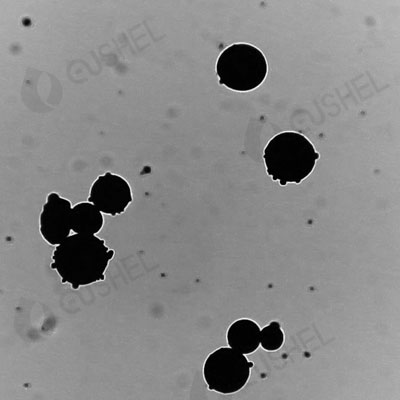
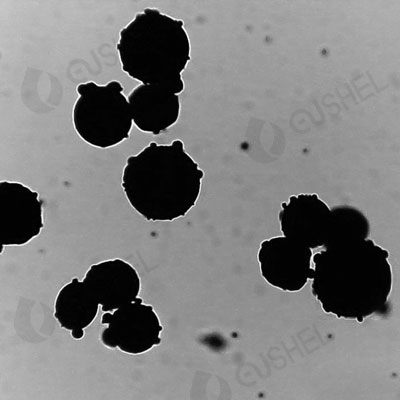
Spherical cobalt powder refers to metallic cobalt powder with a regular spherical particle morphology produced through special processes. It is a high-end product among cobalt powders, which not only retains the core characteristics of metallic cobalt, such as unique magnetic properties, high-temperature strength, and catalytic activity, but also possesses extremely high fluidity, high tap density, and low specific surface area due to its unique spherical morphology. It is primarily used in cutting-edge fields with extremely high requirements for powder performance, such as additive manufacturing (3D printing), cemented carbides, and battery materials.
Basic Characteristics
Advantages of Physical Morphology:Excellent Fluidity: Spherical particles have low inter-particle friction and can spread uniformly like a fluid. This is crucial for automated production processes (e.g., powder spreading in 3D printing, powder injection molding), ensuring high product consistency and quality.
High Tap Density: Spherical particles achieve the tightest packing, resulting in higher initial density of green compacts or printed parts. This leads to superior density, mechanical properties, and electrical/thermal conductivity in the sintered final product.
Low Specific Surface Area and Low Oxygen Content: For the same mass, spherical powder has a much smaller total surface area than irregular powder, meaning less oxygen is adsorbed on the surface. Low oxygen content is critical for ensuring the purity and reliability of the final product (e.g., toughness of cemented carbides, performance of battery materials).
Smooth Surface: The particles have a smooth surface and few internal pores, which is beneficial for forming a uniform and dense structure during sintering or melting processes.
Chemical Properties:Inherits the core chemical properties of metallic cobalt: ferromagnetism, high-temperature strength, and catalytic activity. The spheroidization process contributes to purer and more stable chemical characteristics.
Main Preparation Methods
Plasma Spheroidization:This is currently the most mainstream process. Irregular, angular conventional
cobalt powder is used as raw material and fed into the high-temperature zone (with an extremely high core temperature) of a radio frequency (RF) or direct current (DC) plasma torch. The particles instantly absorb heat and melt, shrinking into spherical droplets under surface tension, and then rapidly cool and solidify into spherical powder during flight. This method effectively reduces oxygen content and yields good sphericity.
Gas Atomization:Under vacuum or a protective atmosphere, molten cobalt liquid is passed through a guide nozzle and broken up and atomized into fine droplets by a ultra-high-speed gas stream (e.g., argon or nitrogen). The droplets spheroidize and cool into spherical powder during flight. This method is suitable for large-scale production and has relatively controllable costs.
Plasma Rotating Electrode Process (PREP):Principle: A high-purity cobalt metal electrode rod is rotated at high speed as the anode, while its end face is bombarded by a plasma torch. The molten droplets are ejected by centrifugal force, spheroidize, and cool.
Advantages: The powder has extremely high purity, perfect sphericity, and almost no hollow particles.
Disadvantages: Low yield and very high cost, mainly used for special high-demand applications.
Spherical Cobalt Powder Application
Spherical cobalt powder applications primarily focus on high-precision, high-performance premium markets. The specifics are as follows:
Metal Additive Manufacturing (3D Printing):A core application. Used in Selective Laser Melting (SLM) technology to directly manufacture complex-structured cobalt-based alloy (e.g., cobalt-chromium-molybdenum alloy) components.
Application Prospects:Medical Implants: Printing dental crowns, bridges, artificial joints (hip joints, knee joints), etc., utilizing the excellent biocompatibility, high strength, and wear resistance of cobalt-chromium alloys.
Aerospace: Manufacturing engine components that operate in high-temperature environments.
Mold Industry: Printing high-performance molds with conformal cooling channels to improve production efficiency.
High-End Cemented Carbides:As a binder phase, the high purity and high fluidity of
spherical cobalt powder contribute to the production of more uniform, higher-performance cemented carbides (WC-Co) with fewer defects. These alloys exhibit improved toughness, wear resistance, and reliability, and are used in precision cutting tools, mining tools, etc.
Battery Materials:As a precursor for preparing high-performance lithium-ion battery cathode materials (e.g., lithium cobaltate, LiCoO₂). The high density and low specific surface area of spherical cobalt powder help increase the electrode's compaction density and energy density.
Catalysts:Ultra-fine spherical cobalt powder has a large specific surface area and numerous active sites, making it suitable as an efficient catalyst for applications such as Fischer-Tropsch synthesis.
Powder Injection Molding (MIM):
Used to manufacture small, complex, and high-precision cobalt-based alloy parts, such as watch components and micro-gears.
| Spec. |
Shape |
Particle Size |
Application |
| Co-DS045 |
Spherical |
15-45 um |
3D printing / additive manufacturing |
| Co-DS53 |
Spherical |
15-53 um |
3D printing / additive manufacturing |
| Co-DS105 |
Spherical |
45-105 um |
3D printing / additive manufacturing |
| Co-DS150 |
Spherical |
45-150 um |
3D printing / additive manufacturing |
| Customizable |
Spherical |
Customizable |
3D printing / additive manufacturing |
Related Products
https://www.fusnano.com/am/spherical-chromium-powder.htmlSpherical chromium powder refers to the
chromium powder which is spherical under the scanning electron microscope (SEM). As chromium powder belongs to refractory metal powder, it is mainly produced by plasma spheroidization technology.
https://www.fusnano.com/am/spherical-copper-powder.htmlSpherical copper powder refers to
copper powder which is spherical under scanning electron microscope (SEM). Compared with irregular copper powder, spherical copper powder has excellent fluidity. Micron grade spherical copper powder above 10 um is mainly produced through gas atomization technology, which can control the required particle size through a mesh screen. Spherical copper powder below 10 um is mainly produced through special processes.
https://www.fusnano.com/am/spherical-molybdenum-powder.htmlSpherical molybdenum powder is the
molybdenum powder which is spherical under scanning electron microscope (SEM). Spherical molybdenum powder is generally produced by plasma spheroidization or plasma rotating electrode equipment.
https://www.fusnano.com/am/spherical-nickel-powder.htmlSpherical nickel powder is a kind of
nickel powder which is spherical under scanning electron microscope (SEM). Spherical nickel powder is widely used in some occasions with high requirements for convective mobility because of its good fluidity.
https://www.fusnano.com/am/spherical-tantalum-powder.htmlSpherical tantalum powder is
tantalum powder which is spherical under scanning electron microscope (SEM). Compared with irregular tantalum powder, the production cost of spherical tantalum powder is higher. It is mainly produced by plasma rotating electrode method and induction plasma spheroidization process.
https://www.fusnano.com/am/spherical-titanium-powder.htmlSpherical titanium powder refers to the pure titanium powder that appears as a spherical shape under scanning electron microscopy (SEM). It is mainly produced through atomization, plasma rotating electrode, and radio frequency plasma spheroidization processes.
https://www.fusnano.com/am/spherical-vanadium-powder.htmlSpherical vanadium powder refers to the
vanadium powder which is spherical under scanning electron microscope (SEM). Spherical vanadium powder is mainly produced by plasma rotating electrode method or induction plasma spheroidization process.