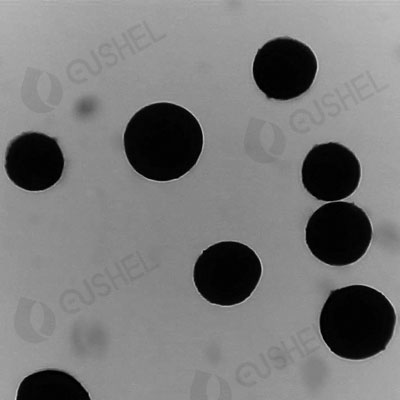
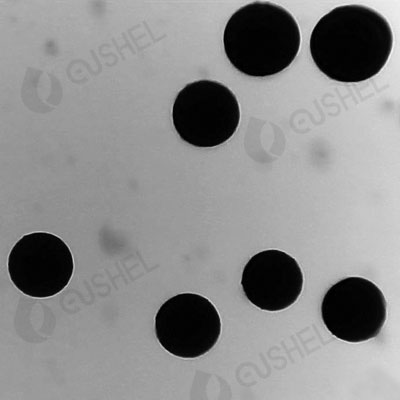
AvailableSpherical Chromium Powder for 3D PrintingSpherical Chromium Powder for AMWholesale & RetailManufacturer & Supplier
Symbol: Cr
Composition: ≥99.9%
Particle size: 15-45 um, 15-53 um, 45-105 um, etc.
Shape: Spherical
In Stock: Available
Ships to: Worldwide
Spherical Chromium Powder Price & List
Spec.
Shape
Particle Size
Application
Cr-DS045
Spherical
15-45 um
3D printing / additive manufacturing
Cr-DS053
Spherical
15-53 um
3D printing / additive manufacturing
Cr-DS105
Spherical
45-105 um
3D printing / additive manufacturing
Cr-DS150
Spherical
45-150 um
3D printing / additive manufacturing
Customizable
Spherical
Customizable
3D printing / additive manufacturing
Note: We provide customized service. If you don't find the powder you want, please send us an email directly. We can customize it according to your requirements.
Spherical Chromium Powder
Chromium powder is a metallic chromium in the form of a powder, typically appearing silver-white to steel-gray. It is an important strategic metal raw material and plays an irreplaceable role in fields such as metallurgy, electroplating, and refractory materials due to its high hardness, excellent corrosion resistance, and its ability to function as a key alloying element. Based on purity and application, it can be classified into metallurgical-grade chromium powder, chemical-grade chromium powder, and high-purity chromium powder.
Basic Characteristics
Physical Properties: High melting point: Approximately 1907°C. High hardness: Metallic chromium itself is very hard and brittle. Magnetic properties: Exhibits ferromagnetism (although very high-purity chromium can exhibit antiferromagnetism). Chemical Properties: Passivation: This is the most prominent chemical characteristic of chromium. At room temperature, a very thin and dense passivation film of chromium trioxide (Cr₂O₃) rapidly forms on the surface of chromium in air or water. This film makes it exceptionally stable, resistant to corrosion from water, atmosphere, and many acids. The corrosion resistance of stainless steel also primarily stems from this characteristic of chromium. Reactivity at high temperatures: At elevated temperatures, chromium can react directly with non-metallic elements such as oxygen, nitrogen, carbon, and sulfur.
Spherical Chromium Powder
Spherical chromium powder refers to metallic chromium powder with a regular spherical particle morphology produced through special processes. It is a high-end product among chromium powders, which not only retains the core characteristics of metallic chromium, such as high hardness and excellent corrosion resistance, but also possesses extremely high fluidity, high tap density, and low specific surface area due to its unique spherical morphology. It is primarily used in cutting-edge fields with extreme requirements for powder performance, such as high-performance additive manufacturing (3D printing), surface engineering, and special alloys.
Basic Characteristics
Advantages of Physical Morphology: Excellent Fluidity: Spherical particles have a low friction coefficient and can spread uniformly like a fluid. This is crucial for automated production processes (e.g., powder recoating in 3D printing, powder feeding in thermal spraying), ensuring process stability and product uniformity. High Tap Density: Spherical particles achieve the tightest packing, resulting in higher density of the formed green body and superior density and mechanical properties of the sintered product. Low Specific Surface Area and Low Oxygen Content: For the same mass, spherical powder has a much smaller total surface area than irregular powder, meaning less adsorption of oxygen and other impurities on the surface. Low oxygen content is crucial for improving the purity, ductility, and high-temperature performance of the final product. Smooth Surface: The particles have a smooth surface and few internal pores, which is beneficial for forming a uniform melt pool in subsequent processing or achieving a dense sintered structure. Chemical Properties: Inherits the core chemical properties of metallic chromium: exceptional passivation (corrosion resistance) and high hardness. The spheroidization process is typically carried out in a protective atmosphere, contributing to purer and more stable chemical characteristics.
Main Preparation Methods
Plasma Rotating Electrode Process (PREP): Principle: A high-purity chromium metal electrode rod is rotated at high speed as the anode, while its end face is bombarded by a plasma torch. The molten droplets are ejected by centrifugal force, spheroidize, and cool. Advantages: The powder has extremely high purity, good sphericity, and almost no hollow or satellite particles. It is one of the main methods for producing high-demand spherical chromium powder. Disadvantages: Low yield and extremely high cost. Electrode Induction Gas Atomization (EIGA): Principle: Under vacuum or a protective atmosphere, the end of a chromium metal electrode rod is melted directly by induction heating. The molten droplets fall and are atomized into spherical powder by a high-pressure inert gas. Advantages: Avoids contamination of the molten chromium by a crucible, allowing for high-purity powder. Disadvantages: Complex technology and high cost. Plasma Spheroidization: Principle: Irregularly shaped conventional chromium powder is used as raw material and fed into the high-temperature zone of a radio frequency plasma torch. The particles instantly melt, spheroidize under surface tension, and then rapidly cool into spherical powder. Advantages: Can upgrade conventional chromium powder to high-performance spherical powder and effectively reduce oxygen content. Disadvantages: Requires high control over the process parameters.
Spherical Chromium Powder Application
Due to its extremely high cost, the application of spherical chromium powder is currently primarily concentrated in scientific research and cutting-edge fields that have extreme requirements for material performance. Metal Additive Manufacturing (3D Printing): A core application direction. It is used in technologies such as Selective Laser Melting (SLM) or Electron Beam Melting (EBM) to directly manufacture complex-structured chromium alloys or high-chromium content components. Application Prospects: Wear-Resistant and Corrosion-Resistant Components: Manufacturing components that operate in extreme wear and corrosion environments, such as pump valves and seals. High-Temperature Alloy Components: As a key alloying element, used for printing high-performance nickel-based or cobalt-based superalloy components to enhance their high-temperature strength and oxidation resistance. Nuclear Industry: Exploration for manufacturing radiation-resistant components. High-Performance Surface Engineering and Coatings: Atmospheric Plasma Spraying (APS) or High-Velocity Oxygen-Fuel (HVOF) Spraying: Using spherical chromium powder to prepare high-quality, dense chromium or chromium-based alloy coatings on the surfaces of critical components (such as aero-engine blades, hydraulic piston rods), providing excellent wear and corrosion protection. Special Powder Metallurgy: Using advanced processes like Hot Isostatic Pressing (HIP) to prepare high-density, high-performance chromium metal or chromium composite materials for key components under special working conditions. Alloy Additive: As a high-purity additive, used for preparing master alloys with extremely uniform composition, such as high-end stainless steel and nickel-based alloys. Scientific Research: Serves as a model material for studying fundamental scientific issues such as the behavior of chromium-based materials in additive manufacturing and coating formation mechanisms.
https://www.fusnano.com/am/spherical-cobalt-powder.html Spherical cobalt powder is a kind of cobalt powder which is spherical under the electron scanning microscope (SEM). Spherical cobalt powder can be produced by atomization production process, so it is also often called atomization spherical cobalt powder. In addition, spherical cobalt powder can also be produced by plasma spheroidization. Spherical cobalt powder produced by plasma spheroidization has high quality, smooth and clean surface of powder particles, few hollow powder and satellite powder, and few gas inclusions.
https://www.fusnano.com/am/spherical-copper-powder.html Spherical copper powder refers to copper powder which is spherical under scanning electron microscope (SEM). Compared with irregular copper powder, spherical copper powder has excellent fluidity. Micron grade spherical copper powder above 10 um is mainly produced through gas atomization technology, which can control the required particle size through a mesh screen. Spherical copper powder below 10 um is mainly produced through special processes.
https://www.fusnano.com/am/spherical-nickel-powder.html Spherical nickel powder is a kind of nickel powder which is spherical under scanning electron microscope (SEM). Spherical nickel powder is widely used in some occasions with high requirements for convective mobility because of its good fluidity.
https://www.fusnano.com/am/spherical-tantalum-powder.html Spherical tantalum powder is tantalum powder which is spherical under scanning electron microscope (SEM). Compared with irregular tantalum powder, the production cost of spherical tantalum powder is higher. It is mainly produced by plasma rotating electrode method and induction plasma spheroidization process.
https://www.fusnano.com/am/spherical-titanium-powder.html Spherical titanium powder refers to the pure titanium powder that appears as a spherical shape under scanning electron microscopy (SEM). It is mainly produced through atomization, plasma rotating electrode, and radio frequency plasma spheroidization processes.
https://www.fusnano.com/am/spherical-vanadium-powder.html Spherical vanadium powder refers to the vanadium powder which is spherical under scanning electron microscope (SEM). Spherical vanadium powder is mainly produced by plasma rotating electrode method or induction plasma spheroidization process.