Nickel Titanium Alloy Powder Price & List
| Spec. |
Shape |
Particle Size |
Application |
| NiTi45-DS045 |
Spherical |
15-45 um |
3D printing / additive manufacturing |
| NiTi45-DS053 |
Spherical |
15-53 um |
3D printing / additive manufacturing |
| NiTi45-DS105 |
Spherical |
45-105 um |
3D printing / additive manufacturing |
| NiTi45-DS150 |
Spherical |
45-150 um |
3D printing / additive manufacturing |
| Customizable |
Spherical |
Customizable |
3D printing / additive manufacturing |
Note: We provide customized service. If you don't find the powder you want, please send us an email directly. We can customize it according to your requirements.
Nickel Titanium Alloy Powder
Nickel titanium alloy powder usually refers to intermetallic compound powder composed of nickel (Ni) and titanium (Ti) in nearly equal atomic ratios. This material has become a star in the field of functional materials due to its unique shape memory effect (SME) and superelasticity (SE).
Core Features
The value of nickel titanium alloy powder lies entirely in two extraordinary characteristics exhibited after its preparation into dense components:
Shape Memory Effect (SME)Definition: The ability of a material to fully recover its original shape after being deformed at low temperatures (martensitic phase) and heated above a specific temperature (austenite transformation end temperature Af).
Simple understanding: "Remembering" one's original shape.
Super Elasticity (SE)Definition: The phenomenon in which a material undergoes deformation far greater than the elastic limit of the metal (up to 8% or even higher) under stress at room temperature (above Af temperature), and the strain can fully recover after unloading.
Simple understanding: It has elasticity like rubber, but its load-bearing capacity far exceeds that of rubber.
Typical applications: Orthodontic archwires, eyeglass frames.
The essence of these characteristics is the reversible process of thermoelastic martensitic transformation within the material. The powder itself does not possess these two macroscopic effects, but after being made into parts through technologies such as 3D printing, the parts have these characteristics.
Preparation Process
Due to the high reactivity (oxidation) of nickel and titanium, and the fact that titanium has a much higher melting point than nickel, traditional melting methods are prone to component segregation and pollution. Therefore, the preparation of high-purity and uniformly composed spherical nickel titanium alloy powder requires advanced atomization technology.
Vacuum Induction Melting Gas Atomization (VIGA):Under vacuum or inert atmosphere, nickel titanium master alloy is melted using an induction coil, and then the molten metal is flowed down through a guide tube. It is crushed and atomized into small droplets using high-pressure inert gas (such as argon), and the droplets are cooled and spheroidized during flight.
Advantages: The technology is relatively mature and the output is large.
Disadvantage: There is a risk of contamination of the melt by ceramic crucibles and guide tubes.
Electrode Induced Melting Gas Atomization (EIGA):This is currently the best process for producing high-quality, low oxygen nickel titanium powder.
Principle: The nickel titanium alloy is made into an electrode rod, and the bottom is sent downwards into an induction coil to be suspended and melted (without crucible contact). The molten droplets are directly atomized by high-pressure gas.
Advantages: Completely avoiding pollution caused by ceramic crucibles, high powder purity, low oxygen content, and good sphericity.
Plasma Rotating Electrode Method (PREP):Make nickel titanium alloy into a consumable electrode and rotate it at high speed, while melting its end face with plasma arc. The molten droplets are thrown out under centrifugal force to form spherical powder.
Advantages: High powder quality, almost no hollow powder or satellite powder.
Disadvantages: Low production capacity, high cost, and relatively coarse powder particle size.
Chemical Composition of Nickel Titanium Alloy Powder
| Spec. |
Ti |
Ni |
| NiTi45 |
Balance |
54-57% |
Nickel Titanium Alloy Powder Application
Nickel titanium alloy powder is a high-end functional metal powder and the cornerstone of manufacturing smart materials. It makes it possible to produce complex structures with adaptability, self expansion, and self repair through 3D printing technology, especially playing an irreplaceable role in personalized medicine and cutting-edge aerospace fields. It is mainly used for additive manufacturing (3D printing) to manufacture smart devices with complex structures. as follows:
Aerospace:Intelligent structural components: Such as deformable wings, adaptive air intakes, satellite unlocking and unfolding mechanisms (automatically unfolding antennas or solar panels through heating).
Biomedical:Orthopedic implants: Customized bone defect repair scaffolds with porous structures that facilitate bone growth.
Cardiovascular equipment: Vascular stent (which can be compressed into a very thin catheter using super elasticity, and can be self expanded after being delivered to the position).
Minimally invasive surgical tools: Such as guiding catheters, catchers, and flexible ends of robotic surgical instruments.
Orthodontics: Customized archwires, push springs, etc.
Industrial and Consumer Goods:Executor: Utilizing shape memory effect to convert thermal energy into mechanical energy, used for micro robots, valve control, etc.
Sensor: Utilizing the performance changes during the phase transition process.
High performance eyeglass frame: Utilizing super elasticity to resist bending and deformation.
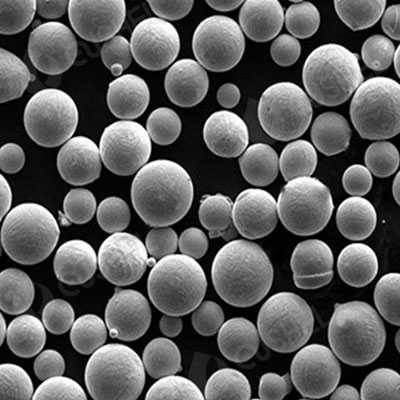
| Spec. |
Shape |
Particle Size |
Application |
| NiTi45-DS045 |
Spherical |
15-45 um |
3D printing / additive manufacturing |
| NiTi45-DS053 |
Spherical |
15-53 um |
3D printing / additive manufacturing |
| NiTi45-DS105 |
Spherical |
45-105 um |
3D printing / additive manufacturing |
| NiTi45-DS150 |
Spherical |
45-150 um |
3D printing / additive manufacturing |
| Customizable |
Spherical |
Customizable |
3D printing / additive manufacturing |
Related Products
CM247LC alloy powder is a kind of low-carbon nickel based alloy powder with nickel as the main component and adding metal elements such as cobalt, chromium, tungsten, tantalum, aluminum and hafnium.
https://www.fusnano.com/am/cm247lc-nickel-alloy-powder.html
Inconel 939 nickel alloy powder is a precipitation hardening cast superalloy, which has high creep strength, cold and hot fatigue resistance and oxidation resistance.
https://www.fusnano.com/am/in939-nickel-alloy-powder.html
Inconel 713 nickel alloy powder is a precipitation hardening cast superalloy, which has high creep strength, cold and hot fatigue resistance and oxidation resistance.
https://www.fusnano.com/am/in713-nickel-alloy-powder.html
Inconel IN738LC alloy powder is a precipitation hardening nickel chromium cobalt alloy powder with titanium, aluminum, molybdenum, tungsten.
https://www.fusnano.com/am/in738lc-nickel-alloy-powder.html
Inconel 718 alloy powder is a precipitation hardening nickel chromium iron alloy powder containing niobium and molybdenum.
https://www.fusnano.com/am/in718-nickel-alloy-powder.html
Inconel 625 alloy powder is a kind of nickel based alloy powder with nickel as the main component and chromium, molybdenum, niobium, iron, cobalt and other elements added.
https://www.fusnano.com/am/in625-nickel-alloy-powder.html