Spherical Nickel Powder Price & List
| Spec. |
Shape |
Particle Size |
Application |
| Ni-DS045 |
Spherical |
15-45 um |
3D printing / additive manufacturing |
| Ni-DS053 |
Spherical |
15-53 um |
3D printing / additive manufacturing |
| Ni-DS105 |
Spherical |
45-105 um |
3D printing / additive manufacturing |
| Ni-DS150 |
Spherical |
45-150 um |
3D printing / additive manufacturing |
| Customizable |
Spherical |
Customizable |
3D printing / additive manufacturing |
Note: We provide customized service. If you don't find the powder you want, please send us an email directly. We can customize it according to your requirements.
Spherical Nickel Powder
Nickel powder is a metallic nickel in the form of a powder, typically appearing as a gray powder. It is a fundamental and important metal powder with a wide range of applications in various industrial fields such as metallurgy, chemical engineering, and batteries due to its good magnetic properties, catalytic activity, and corrosion resistance.
Basic Characteristics
Physical Properties:Medium melting point: Approximately 1455°C.
Good ductility and magnetism: Bulk metallic nickel is ferromagnetic (meaning it can be attracted by a magnet) and has good machinability.
Chemical Properties:Good corrosion resistance:
Nickel does not oxidize easily in air and can resist corrosion from alkalis, salts, and most organic media. Its stability is particularly outstanding in alkaline environments.
Medium reactivity: At high temperatures, it can react with elements such as oxygen and sulfur. Its chemical reactivity is higher than that of tantalum and vanadium but lower than that of alkali metals and alkaline earth metals.
Catalytic properties: Nickel powder, especially ultrafine nickel powder and highly active Raney nickel, is an efficient catalyst for many chemical reactions (such as hydrogenation reactions).
Spherical Nickel Powder
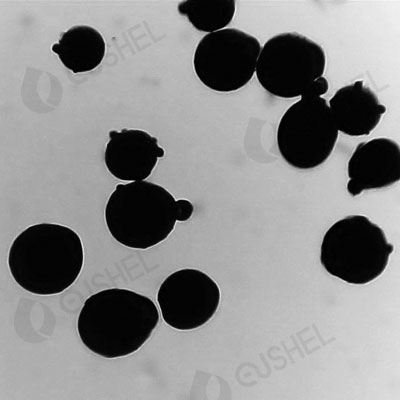
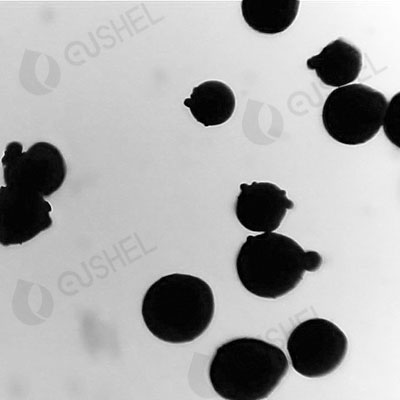
Spherical nickel powder refers to metallic nickel powder with a regular spherical particle morphology produced through special processes. Compared to irregularly shaped nickel powder, its unique spherical morphology grants it a series of superior physical properties, making it a key material in high-tech fields, particularly additive manufacturing (3D printing) and powder metallurgy.
Basic Characteristics
Advantages of Physical Morphology:High Sphericity and Fluidity: The near-perfect spherical particles give the powder excellent fluidity. This allows it to spread evenly and stably, like a liquid, during 3D printing and powder metallurgy processes, forming dense and flat powder layers, which is crucial for ensuring the quality of the formed parts.
High Apparent Density and Tap Density: Spherical particles have fewer voids between them, allowing for tighter packing, resulting in higher apparent density and tap density. This helps improve the density and mechanical properties of the final product.
Low Specific Surface Area: Compared to irregular powder, spherical powder of the same mass has a smaller total surface area. This means lower oxygen content on the surface, making it less prone to oxidation during processing, which is beneficial for improving the purity and performance of the final product.
Smooth Surface: The particles have a smooth surface and low internal porosity, helping to reduce defects in the final product.
Chemical Properties:It shares the same good corrosion resistance (especially against alkalis) and catalytic activity as conventional nickel powder. However, its chemical properties are more influenced by its purity (e.g., oxygen content) and surface condition.
Main Preparation Methods
Plasma Atomization:Currently the mainstream method for producing high-purity, high-performance spherical nickel powder. Nickel metal wire or coarse powder is instantaneously melted in a plasma torch. The molten droplets spontaneously form spheres under surface tension and solidify while falling. Powder produced by this method has good sphericity and high purity, but the cost is relatively high.
Gas Atomization:Molten nickel liquid is passed through a guide nozzle and broken up and atomized into fine droplets by a high-speed gas stream (such as argon or nitrogen). The droplets spheroidize and cool into spherical powder during flight. This is one of the most widely used and cost-effective methods, suitable for large-scale production.
Carbonyl Process:Prepared via the thermal decomposition of nickel carbonyl (Ni(CO)₄). By controlling the decomposition conditions, very fine spherical nickel powder with uniform particle size distribution and high purity can be obtained.
Spherical Nickel Powder Application
Leveraging its unique advantages, spherical nickel powder is primarily used in cutting-edge manufacturing fields that demand extremely high powder performance.
Metal Additive Manufacturing (3D Printing):A core application. It is used in technologies such as Selective Laser Melting (SLM) and Electron Beam Melting (EBM) to directly manufacture complex-structured nickel-based superalloy components. Widely applied in aerospace (e.g., engine blades, fuel nozzles), energy (e.g., turbine discs), and medical (e.g., implants) fields. Its excellent flowability and high density are prerequisites for ensuring a stable printing process and the production of dense, defect-free parts.
High-End Powder Metallurgy (MIM):Metal Injection Molding (MIM): Spherical nickel powder or nickel-based alloy powder is an ideal raw material for the MIM process, used to manufacture small, complex, and high-precision structural components, such as watch parts, medical instruments, and firearm components. Its high flowability makes it easier to mix with binders and inject into molds.
Thermal Spray Coatings:Using plasma spray or flame spray technology, spherical nickel powder is melted and sprayed onto a substrate surface to form wear-resistant and corrosion-resistant protective coatings, used for component repair or surface performance enhancement.
Conductive Pastes and Catalysts:Ultra-fine spherical nickel powder can be used to prepare high-performance conductive pastes (e.g., MLCC internal electrodes) and catalysts. Its regular morphology facilitates the formation of uniform conductive networks or active sites.
| Spec. |
Shape |
Particle Size |
Application |
| Ni-DS045 |
Spherical |
15-45 um |
3D printing / additive manufacturing |
| Ni-DS053 |
Spherical |
15-53 um |
3D printing / additive manufacturing |
| Ni-DS105 |
Spherical |
45-105 um |
3D printing / additive manufacturing |
| Ni-DS150 |
Spherical |
45-150 um |
3D printing / additive manufacturing |
| Customizable |
Spherical |
Customizable |
3D printing / additive manufacturing |
Related Products
https://www.fusnano.com/am/spherical-cobalt-powder.htmlSpherical cobalt powder is a kind of
cobalt powder which is spherical under the electron scanning microscope (SEM). Spherical cobalt powder can be produced by atomization production process, so it is also often called atomization spherical cobalt powder. In addition, spherical cobalt powder can also be produced by plasma spheroidization. Spherical cobalt powder produced by plasma spheroidization has high quality, smooth and clean surface of powder particles, few hollow powder and satellite powder, and few gas inclusions.
https://www.fusnano.com/am/spherical-chromium-powder.htmlSpherical chromium powder refers to the
chromium powder which is spherical under the scanning electron microscope (SEM). As chromium powder belongs to refractory metal powder, it is mainly produced by plasma spheroidization technology.
https://www.fusnano.com/am/spherical-copper-powder.htmlSpherical copper powder refers to
copper powder which is spherical under scanning electron microscope (SEM). Compared with irregular copper powder, spherical copper powder has excellent fluidity. Micron grade spherical copper powder above 10 um is mainly produced through gas atomization technology, which can control the required particle size through a mesh screen. Spherical copper powder below 10 um is mainly produced through special processes.
https://www.fusnano.com/am/spherical-molybdenum-powder.htmlSpherical molybdenum powder is the
molybdenum powder which is spherical under scanning electron microscope (SEM). Spherical molybdenum powder is generally produced by plasma spheroidization or plasma rotating electrode equipment.
https://www.fusnano.com/am/spherical-tantalum-powder.htmlSpherical tantalum powder is
tantalum powder which is spherical under scanning electron microscope (SEM). Compared with irregular tantalum powder, the production cost of spherical tantalum powder is higher. It is mainly produced by plasma rotating electrode method and induction plasma spheroidization process.
https://www.fusnano.com/am/spherical-titanium-powder.htmlSpherical titanium powder refers to the pure titanium powder that appears as a spherical shape under scanning electron microscopy (SEM). It is mainly produced through atomization, plasma rotating electrode, and radio frequency plasma spheroidization processes.
https://www.fusnano.com/am/spherical-vanadium-powder.htmlSpherical vanadium powder refers to the
vanadium powder which is spherical under scanning electron microscope (SEM). Spherical vanadium powder is mainly produced by plasma rotating electrode method or induction plasma spheroidization process.