Spherical Titanium Powder Price & List
| Spec |
Shape |
Particle Size |
Application |
| Ti-DS045 |
Spherical |
15-45 um |
3D printing / additive manufacturing |
| Ti-DS053 |
Spherical |
15-53 um |
3D printing / additive manufacturing |
| Ti-DS105 |
Spherical |
45-105 um |
3D printing / additive manufacturing |
| Ti-DS150 |
Spherical |
45-150 um |
3D printing / additive manufacturing |
| Customizable |
Spherical |
Customizable |
3D printing / additive manufacturing |
Note: We provide customized service. If you don't find the powder you want, please send us an email directly. We can customize it according to your requirements.
Spherical Titanium Powder
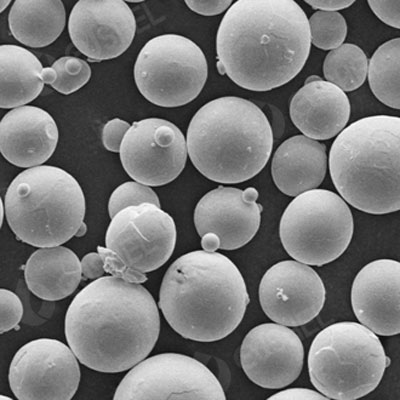
Spherical titanium powder refers to high-purity metallic titanium powder with spherical or nearly spherical particle shapes obtained through specific preparation techniques. It is a core raw material in advanced manufacturing fields such as metal additive manufacturing (3D printing), powder metallurgy, and thermal spraying, and has excellent performance due to its unique spherical shape.
Features and Benefits
Compared with irregularly shaped titanium powder, spherical titanium powder has significant advantages:
High fluidity:Spherical particles have low friction between each other and can flow smoothly like liquids. This is crucial for 3D printing technologies that require automatic powder spreading, such as SLM and EBM, to ensure uniform and dense powder spreading, thereby printing high-quality products.
High compaction density and packing density:Spherical particles can be packed more tightly together, leaving fewer gaps. This means that the initial density of the printed parts is high, and after melting, the final product has better density and superior mechanical properties.
Low specific surface area:Spherical is the shape with the smallest surface area for the same volume. A smaller surface area means:
Less oxygen content:Titanium is a very reactive metal that easily reacts with oxygen. A smaller specific surface area results in less adsorbed oxygen, and the overall oxygen content of the powder is low, which is crucial for ensuring the mechanical properties (especially fatigue strength) of the final product.
Better process stability:In the 3D printing process, the powder is less prone to oxidation, the printing process is more stable, and the consistency of the finished product quality is higher.
Composition uniformity:High quality spherical titanium powder has a uniform chemical composition and low impurity content, ensuring the reliability and consistency of the final product performance.
Preparation Process
The preparation of spherical titanium powder requires high-tech processes, and mainstream methods include:
Plasma Rotating Electrode Method (PREP):Principle: The titanium alloy is made into a consumable electrode, and while rotating at high speed, its end face is melted by plasma arc. The melted titanium droplets are thrown out under centrifugal force and cooled in the air to form spherical powder.
Features: High powder purity, good sphericity, almost no hollow powder (less satellite powder), but high cost, relatively coarse particle size.
Gas Atomization Method (GA/EIGA):Principle (taking EIGA as an example): Using electrode induction melting gas atomization technology without a crucible. Titanium alloy bars are heated and melted by induction coils in a vacuum or inert atmosphere, and the droplets formed at the ends are broken and cooled by a high-speed flow of inert gas (such as argon) to spheroidize.
Characteristics: The powder has a fine particle size, controllable particle size distribution, and relatively low production cost. It is currently the main method for preparing titanium powder for 3D printing. But there may be a small amount of hollow powder and satellite powder present.
Plasma Atomization Method (PA):Principle: Multiple plasma torches are used to melt the ends of titanium wires, and the melted titanium droplets are atomized and spheroidized by high-speed plasma airflow.
Features: The powder has extremely high sphericity, fine particle size, and excellent purity, but the highest cost.
Chemical Composition Grade
| Grade |
Ti |
N (Max.) |
H (Max.) |
O (Max.) |
C (Max.) |
Fe (Max.) |
| Grade 1 |
Balance |
0.03% |
0.015% |
0.18% |
0.08% |
0.20% |
| Grade 2 |
Balance |
0.03% |
0.015% |
0.25% |
0.08% |
0.30% |
| Grade 3 |
Balance |
0.05% |
0.015% |
0.35% |
0.08% |
0.50% |
| Grade 4 |
Balance |
0.05% |
0.015% |
0.40% |
0.08% |
/ |
Adaptable 3D Printer Types
EOS, SLM Solutions, Concept Laser, Renishaw, Phenix Systems, Arcam AB, Z Corp, Extrudehone, 3Dsystems, ExOne, etc.
Spherical Titanium Powder Application
Spherical titanium powder is the "grain" of high-end manufacturing, especially additive manufacturing industry. Its excellent physical and chemical properties make it possible to manufacture complex, lightweight, and high-performance titanium alloy components, greatly promoting innovation and development in fields such as aerospace and biomedicine. Its specific applications are as follows:
Metal Additive Manufacturing (3D printing):This is the most important application area for spherical titanium powder.
Aerospace:Manufacturing lightweight and high-strength complex structural components, such as aircraft engine blades, brackets, cabin door components, etc.
Medical Implants:Manufacturing artificial joints (hip joints, knee joints), bone repair implants, dental implants, etc. Its good biocompatibility and designable porous structure facilitate bone growth.
High End Molds:Manufacturing high-performance injection molds with conformal cooling water channels significantly improves production efficiency.
Car Racing:Manufacturing lightweight racing components.
Powder Metallurgy (PM):Used in traditional molding sintering processes or metal injection molding (MIM) to manufacture small titanium parts with complex shapes, such as watch cases, mobile phone components, etc.
Thermal Spraying:As a coating material, it is sprayed onto other metal surfaces to provide them with corrosion resistance, wear resistance, and other properties.
Laser Cladding:Used for parts repair and surface strengthening.
| Spec |
Shape |
Particle Size |
Application |
| Ti-DS045 |
Spherical |
15-45 um |
3D printing / additive manufacturing |
| Ti-DS053 |
Spherical |
15-53 um |
3D printing / additive manufacturing |
| Ti-DS105 |
Spherical |
45-105 um |
3D printing / additive manufacturing |
| Ti-DS150 |
Spherical |
45-150 um |
3D printing / additive manufacturing |
| Customizable |
Spherical |
Customizable |
3D printing / additive manufacturing |
Related Products
https://www.fusnano.com/am/spherical-cobalt-powder.htmlSpherical cobalt powder is a kind of
cobalt powder which is spherical under the electron scanning microscope (SEM). Spherical cobalt powder can be produced by atomization production process, so it is also often called atomization spherical cobalt powder. In addition, spherical cobalt powder can also be produced by plasma spheroidization. Spherical cobalt powder produced by plasma spheroidization has high quality, smooth and clean surface of powder particles, few hollow powder and satellite powder, and few gas inclusions.
https://www.fusnano.com/am/spherical-chromium-powder.htmlSpherical chromium powder refers to the
chromium powder which is spherical under the scanning electron microscope (SEM). As chromium powder belongs to refractory metal powder, it is mainly produced by plasma spheroidization technology.
https://www.fusnano.com/am/spherical-copper-powder.htmlSpherical copper powder refers to
copper powder which is spherical under scanning electron microscope (SEM). Compared with irregular copper powder, spherical copper powder has excellent fluidity. Micron grade spherical copper powder above 10 um is mainly produced through gas atomization technology, which can control the required particle size through a mesh screen. Spherical copper powder below 10 um is mainly produced through special processes.
https://www.fusnano.com/am/spherical-molybdenum-powder.htmlSpherical molybdenum powder is the
molybdenum powder which is spherical under scanning electron microscope (SEM). Spherical molybdenum powder is generally produced by plasma spheroidization or plasma rotating electrode equipment.
https://www.fusnano.com/am/spherical-nickel-powder.htmlSpherical nickel powder is a kind of
nickel powder which is spherical under scanning electron microscope (SEM). Spherical nickel powder is widely used in some occasions with high requirements for convective mobility because of its good fluidity.
https://www.fusnano.com/am/spherical-tantalum-powder.htmlSpherical tantalum powder is
tantalum powder which is spherical under scanning electron microscope (SEM). Compared with irregular tantalum powder, the production cost of spherical tantalum powder is higher. It is mainly produced by plasma rotating electrode method and induction plasma spheroidization process.
https://www.fusnano.com/am/spherical-vanadium-powder.htmlSpherical vanadium powder refers to the
vanadium powder which is spherical under scanning electron microscope (SEM). Spherical vanadium powder is mainly produced by plasma rotating electrode method or induction plasma spheroidization process.